
Core Automation, founded by former OpenAI researcher Jerry Tworek, is raising fresh funding at a $4 billion valuation just six weeks after its founding and after an earlier round that valued the company at about $1 billion. The startup has not shipped any product or service, yet investors are lining up.
This isn't isolated. In the past 12–18 months:
- Humans& (ex-OpenAI, Alphabet, xAI researchers): $480M seed at $4.48B valuation
- Periodic Labs (ex-OpenAI): Raising $500M at $7.5B valuation (nearly 6x jump since founding)
- Recursive (Richard Socher): Talks at $4B valuation
AI startups grabbed 33% of global venture capital in 2024, with seed-stage AI companies commanding a 42% valuation premium over non-AI peers.
Is History Repeating Itself? Dot-Com, Fintech, Web3, and Now AI
Dot-Com Bubble (1995–2002): The Original "Zero Revenue, Billion Dollar" Madness
The NASDAQ Composite rose 86% in 1999 alone, peaking at 5,048 on March 10, 2000. Companies with zero revenue got billion-dollar valuations. Pets.com burned through $300 million in just 2 years before collapsing.
When the bubble burst:
- NASDAQ fell 77% from peak to October 2002
- $5–8 trillion in market value wiped out
- At least 4,854 internet companies shut down or were acquired
- 608 pure website failures alone in three years
Yet the Internet itself didn't die. Amazon survived, eBay grew, and the infrastructure built during the bubble enabled the next decade of digital commerce.
Fintech Bubble (2021–2023): Stripe's 73% Valuation Plunge
Fintech funding hit $143 billion in 2021—more than any other sector—with 8,540 deals. Stripe reached $95 billion valuation in March 2021, peaking near $200 billion in January 2022 on secondary markets.
By 2023:
- Fintech funding fell 42% YoY to $35.45 billion
- Stripe's valuation plunged 73% to $52.5 billion
- Only 3 fintech startups saw valuation increases since 2022: Rippling, Gusto, Deel
- Banking tech segment fell 62% to $4 billion
But the survivors—Stripe, Plaid, Adyen—now power global payment infrastructure serving millions of businesses across Singapore, Hong Kong, and Tokyo.
Web3/Crypto Bubble (2021–2022): $2 Trillion Vanished
Bitcoin hit $69,000 in late 2021, Ethereum $4,800. By mid-2022:
- Bitcoin dropped below $20,000 (71% decline)
- Ethereum fell below $1,000 (79% decline)
- Nearly $2 trillion lost in digital assets market in 2022 alone
- $3.9 billion in crypto/Web3 losses from hacks and exploits in 2022
- FTX, Terra-Luna, Three Arrows Capital collapsed in daisy-chain systemic failure
- Singapore-based Vauld (backed by Coinbase, Peter Thiel) halted withdrawals
Yet blockchain infrastructure survived. Token Terminal now tracks real DeFi usage. Cross-chain bridges process billions weekly. The tech didn't disappear—just the speculative excess.
The lesson: speculative excess destroys wealth, but infrastructure built during bubbles enables the next generation. Early investors who got out in time made fortunes. Late entrants lost everything.
Why Investors Are Betting Big on Empty Cap Tables
The Résumé Round Phenomenon
Investors write checks based on founder credentials, not traction. Former OpenAI, Anthropic, and Google DeepMind researchers raise hundreds of millions on theory and team strength alone. Mira Murati's Thinking Machines raised $2B at $10B valuation in 2025.
The FOMO Dynamic
Venture firms are stretching price discipline because they are convinced the current wave of AI will mint the next handful of 10–100 billion dollar “generational” companies, even though historical data suggests such outcomes only emerge roughly once every 2–5 years. In that environment, missing a single winner is career risk, so capital piles into anything with top-tier pedigrees or proximity to foundation models rather than into measured, fundamentals-driven bets. In hubs like Hong Kong and Singapore—where family offices, sovereign funds, and corporate venture arms are all under pressure to show an AI strategy—that fear of being the last one into the trade often matters more than classical valuation logic when term sheets get written.
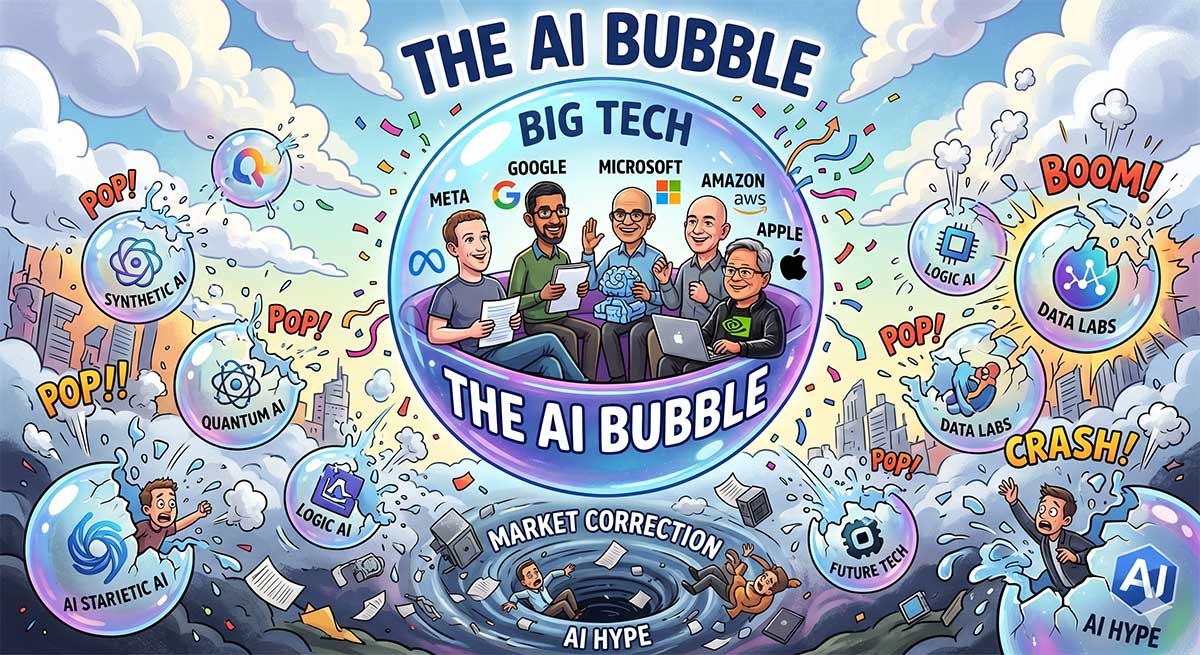
Is this another bubble about to burst? Not quite
AI Has Real Revenue Pathways Dot-Com Never Had
Companies like Anthropic, Cohere, and AI tooling startups are already generating tens of millions in annual recurring revenue before IPO. This isn’t Pets.com trying to sell dog food online in 1999; it’s enterprises signing contracts where AI support agents handle tens of thousands of conversations a month, with outcome‑based pricing from vendors like Fin, Zendesk, and Salesforce translating into five‑ and even low six‑figure monthly bills at scale—and documented deployments showing roughly 40% customer‑service headcount avoidance as a result.
The Infrastructure Will Survive Regardless
As one Singapore-based VC who backed three dot-com survivors told me: "The bubble will burst, and that's what makes it dangerous."
But the infrastructure being built today—GPUs, data centers, model training pipelines, inference clusters—won't disappear. Just as dot-com's fiber optic cables enabled streaming video a decade later, today's AI compute infrastructure will power the next wave of applications whether the current hyped startups survive or not.
The Real Risk Isn't the Bubble—It's Missing the Cruise Phase
Most people who lost money in dot-com also missed Amazon's 2,000%+ post-bubble run. Most who fled Web3 in 2022 missed Bitcoin's 2024 ETF-driven rally. The winners aren't those who predicted the burst—they're those who stayed invested in the winners through the volatility.
For founders: Don't obsess over avoiding a bubble. Build real revenue, control burn, and position for the inevitable consolidation. When the dust settles, the survivors will acquire talent and tech at fire-sale prices.
For investors: Portfolio concentration is the real danger, not valuations. Spread bets across 20+ AI startups, accept that 15 will fail, and let the 4–5 winners deliver 100x returns that make the losses irrelevant.
Final Takeaway
History suggests FOMO doesn't end well, but massive wealth gets created in the boom phase. The AI bubble will likely burst—but AI itself won't disappear. The infrastructure, talent, and real use cases being built today will power the next decade of innovation.


